

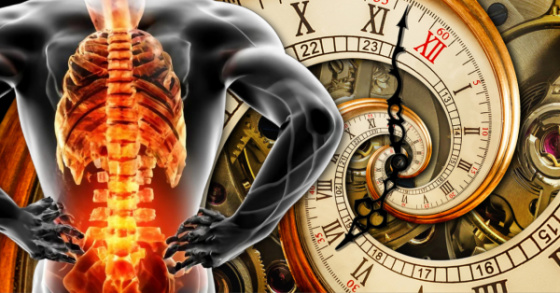
I have always liked Carly Simon’s song “Haven’t Got Time for the Pain.” The song is about someone in the narrator’s life who taught her how to let go of melodrama and self-sabotage and that life is too short to be addicted to such pain and suffering and letting those unruly voices in her head run rampant. She came to the healthy conclusion that she no longer had time for such pain in her life. And while the narrator presumably needed someone to show her the light, we can also use life itself as our teacher to come to the same conclusion and inspire behavior modification.
Types of Pain
Not all pain is related to being our own worst enemy. There are other types of pain that are seemingly unavoidable if one lives long enough and develops close bonds or cares about what they do and depends on it for their livelihood. These can be ignored in the short-term but ultimately always need to be addressed if we are to live long, healthy, and fruitful lives.
“Pain is inevitable, suffering is optional.” Click To TweetThe only way out is through so it is important to recognize that it’s incumbent upon us to integrate painful experiences in ways such that we end up living the motto “Know pain, know gain.” I think this is much more of a healthy approach to pain than “No pain, no gain.” That seems more masochistic to me. It’s vital that we learn from pain and grow from the lessons it can teach us.
At 59 I have been no stranger to painful events in my life. These include:
- In 1995 when my son was two he suffered a stroke at the age of two and he was at risk of never making it. Fast forward to today, and while he has no fine motor movement in his left hand and walks with a bit of a limp, he is 31, independent, completed college, earned a masters in sports management, he was a basketball coach for many years, and now is in the insurance business. He has an unbelievably positive attitude and never lets his disability get him down or in the way of living life. He is the anti-victim and a source of admiration and pride.

- In 1998 I lost my father to melanoma. I was very close to him so his passing left a big void for me. His last coherent word he said was “Gary” when I came into the hospital room to visit him. Not long after that he was moved to hospice. I had never had any experience with witnessing death up close prior to this. The nurse told us that it was very important that we give our loved ones our permission to let go of life. Telling my father this was incredibly moving and something I will never forget. As I was thinking that was the end and preparing to leave, my wife Roneet said to me there was no way we could leave him there without someone by his side. To this day I am so grateful to her for insisting on this (it turns out whatever she insisted on almost always turned out to be the right thing to do) as we were there when he passed away. We discovered that he had passed before the nurse did and I came to learn how much dignity there can be in death. I would never have had such a beautiful experience had we left.
Since he was the closest person in my life to have passed away at that time I came to learn that while someone may no longer be physically present, if they have had a profound impact on us then we can carry them with us in our hearts and ask ourselves what they would have done when facing an important decision in our lives. We can always lean on them in our own ways whenever we’re in a time when we need support or wise counsel.
- In the early 2000s we faced significant business challenges. I had much more responsibility at CWS during this downturn than I did for the first one I experienced in the late 1980s and early 1990s. The pressure I felt was quite significant. And while we eventually navigated our way out of those challenges we then had to contend with the issues that materialized during the Great Financial Crisis between 2008-10. The upside of having to manage through such situations is that it creates incredible focus for the organization and strengthens the bond of the team. There becomes a mission-oriented mindset and incredible clarity about what needs to take place to get through to the other side. There are no distractions or grand ideas to take one off course. Having experience with such challenges builds up calluses and organizational muscle that enhances resiliency and a sense of faith that we can deal with whatever heads our way. At the same time, it’s also important to do all we can to follow Warren Buffett’s advice about how to avoid being swept under by an avalanche. His suggestion was to not be on the mountain when it happens.

- In 2018 my wife of 29 years had a terrible accident from which she never recovered. Her passing was ultimately facilitated when the decision was made to stop all heroic measures. Having to witness the terrible tragedy and then having to tell my kids about what happened to their mother was absolutely heartbreaking. And then having to come to terms with knowing all we had created together would freeze in time and there would never be an “us” going forward was incredibly devastating. I was a very broken man. And yet, I also knew that I had a lot of people depending upon me and that I had to do all I could to keep it together so I didn’t drop the ball in important areas of my life. Having such responsibilities was actually a very helpful way for me to focus on other things than the loss of Roneet and the void her passing created.
Roneet was central to my life in many ways and taught me so much about being there for others, how to be a partner, to not be afraid to address issues head on, finding the courage to take actions outside of our comfort zone to catapult our lives forward in much more significant ways, being there for our children and family, and how to enjoy life. This barely scratches the surface of what she taught me. I was so lucky to have been in a relationship with such a dynamic and beautiful woman. At the same time, I never drew the fatalistic conclusion that I could never find a fulfilling relationship again. Rather, our relationship taught me what I valued in being with another person and that, while there was no need to settle just to avoid being alone, that the possibility must exist that I could have another successful relationship since I had the experience of having been in one.
Much to my surprise and completely unexpected, I met Heather quite randomly. We came to learn that we both had experienced tragic losses and that Roneet and her past love were laid to rest in the same cemetery. Sharing a connection through loss was incredibly powerful. We also both loved music and she had a passion for tennis and I was just getting back into it. Her heart was warm and I soon came to learn that she would always have my back. I have Roneet to thank in some ways for giving me the tools to recognize the potential in a future relationship that could be built on very solid ground and have a compelling future of growth, shared values, open communication, and a lot of fun. Heather and I solidified our relationship with our recent marriage in March. It’s hard enough to find one great partner in life and to find two exemplifies how fortune has shown favor towards me.
- In 2021 after many years of having my heart monitored due to the presence of a leaky mitral valve, my condition took a turn for the worse such that surgery was no longer an option, but a necessity. When I met with the heart surgeon he said that he has done well over 1,000 of these types of repairs and said that 80% were of the garden variety kind which are quite routine. He said, unfortunately, that mine fell into the 20% category which was more complicated. He also said that he had done a number of these and I would be fine but it’s just more challenging. After the surgery was finished, Heather met with the doctor and asked him how it went. He said that it was one of the worst valves he has ever worked on. Woah. I had no idea it was that bad and I’m glad I was in such competent hands.

I had to stay in the hospital close to a week because I lost a lot of blood and almost needed a transfusion. I was weak, I had experienced a collapsed lung, and when I got home I was in a lot of pain for the first few days. I was determined not to take any type of pain medication that was prescribed to me if I could avoid it. I just didn’t want to take the risk of any kind of dependence. I took it one day at a time and looked forward to making some kind of progress each day. Heather was with me every step of the way. 33 days later I was back on the court hitting the ball for a short period of time and today I’m pleased that the surgery was a great success.
So why am I bringing all of this up? It’s because I’ve gotten to the point that I no longer have time to deal with the pain related to my sciatica issue. It’s been going on for over five years. For a while there would be flair ups and then go dormant for a long time. Unfortunately it has become more ever present and negatively impacted the quality of my life. And while I haven’t let it get in the way of me playing tennis, it does limit how much I can play. It’s much more disabling, however, in everyday life when I’m walking and standing in one place. And more recently, it has impacted the quality of my sleep as I often wake in pain.
I have bone spurs that are impinging on one of my nerves so that creates inflammation and great discomfort that has only gotten worse and more persistent. For example, when Heather and I were in Amsterdam late last year, I couldn’t walk for more than five minutes without having to do squats in the middle of crowds on sidewalks as this is one of the only actions that can give me temporary relief without having to sit down. I managed to not let it get in the way of us seeing whatever we wanted but it was not always very enjoyable. I definitely don’t want to be that person who holds other people back but I’m heading that way without surgery.
The decision to have back surgery should always be a last resort. Over the years I have gone to a chiropractor, had massages, received two epidural injections, done acupuncture and acupressure, and worked out consistently with a trainer who is also a physical therapist. All to no avail in terms of achieving long-term relief. Enough is enough and I haven’t got time for the pain anymore so when you read this I will have had a minimally invasive two hour operation on my L5-S1. The recovery time is projected to be four to six weeks.
People have asked me if I’m nervous going into the surgery and honestly I’m approaching it with great hope. I can recall pretty vividly what I had to deal with in terms of the aftermath of my heart surgery and, maybe I’m naive, but I have a hard time believing this will be worse than that. In addition, while my heart condition caused me no pain, my back condition does. As a result, the former corrected a problem that was painless but resulted in a lot of pain while the latter will correct a condition that has been very painful so even if my recovery has pain it’s not like I haven’t been experiencing it already, unlike my heart surgery.
There’s a line in a Grateful Dead song that says,
See here how everything lead up to this day
And it’s just like any other day that’s ever been
Sun going up and then the sun going down
I feel like all of the pain and challenges I have experienced, endured, processed, and integrated into my life have helped prepare me for this day. And while it’s just like any other day that’s ever been on a macro basis in that the sun goes up and then it goes down and nature takes its course, it’s not like any other day for me. And that’s what gives life meaning. Every day is not the same and we can learn from the past and apply it today to hopefully create an even better and more meaningful tomorrow. One filled with more joy and less pain.
I hope that the problem is addressed in a way that this next phase of my life will have so much less pain and will be even more enjoyable. I’m incredibly hopeful.
I’ll sign off with a short excerpt from Ed Catmull from his book Creativity, Inc: Overcoming the Unseen Forces that Stand in the Way of True Inspiration that is a good summation of what I’ve been trying to convey in this blog post.
“If you’re sailing across the ocean and your goal is to avoid weather and waves, then why the hell are you sailing?” he says. “You have to embrace that sailing means that you can’t control the elements and that there will be good days and bad days and that, whatever comes, you will deal with it.”

Thanks for sharing.
I experienced some hardships and severe challenges in my career but had the best years between ages 65 and 75. I would still be working but all of my opportunities require being aways from home — and I did that for 20 years and will not do it any more.
At age 86, I have a bunch of maladies. My balance is terrible and I have an eye condition called blepharitis and neuropathy in my feet. So, I am in physical therapy to deal with the balance issue and still trying to reduce the impact of blepharitis (there is no cure at this time).
But life is a journey and I am busy while trying to enjoy every day. Life is still pretty darn good! A good attitude is very important!
I wish you well!
Hang in there Sunshine