

Nine-mile skid on a ten mile ride, hot as a pistol but cool inside
Cat on a tin roof, dogs in a pile
Nothin’ left to do but smile, smile, smile
-Jerry Garcia and Robert Hunter
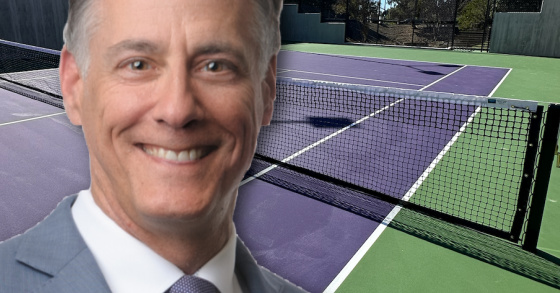
I played in a tennis tournament last week. I was very excited for the opportunity to test myself in a more pressure-filled setting. I didn’t know anything about my opponent, but I went into the match feeling pretty good about how my game has been developing. When I got to the court and met him, I saw that he was probably 10 to 15 years younger than me and was clearly obsessed with lifting weights, as he had a bodybuilder-type physique. He was an impressive physical specimen!
During warm-ups, I could see that he could hit the ball well and had a very good serve, albeit a bit erratic. The ruminations in my head started as my mind began to race about how I would play him, how he might play me, maybe this match was going to be harder than I thought, etc. These thoughts started filtering through and triggering sympathetic nervous system reactions (i.e., fight-or-flight mode). I had to prepare for a battle, and my nerves confirmed this for me.
The first set got off to a pretty poor start as he went up 4-1. I got it to 4-3, but he ended up winning 6-3 in a one-hour set. It was a tough battle. The mental wars going on inside of me were pretty interesting. During one point in the first set, I thought to myself, “Wow, I have a lot of butterflies in my stomach.” I then reframed it and told myself how beautiful it is to see butterflies flying around, as some are so beautiful they can take one’s breath away. That actually helped me to look at butterflies, even though triggered by nervousness, in a more beautiful way. This led to another epiphany.
If I could play tennis with an open heart and enjoy the entirety of the experience from a loving perspective, then this could be a beautiful way to play the game. I then said where there’s love, there’s life, and where there’s life, there’s beauty. So, in essence, love equals beauty. There is beauty when the heart is open and giving, and I must say this recognition really helped me as well, and it’s something I will do my best to put into practice off the court as well.
Love—>Life—>Beauty:
Love = Beauty
Maybe because I wrote last week about Jim Simons, who tried to live his life guided by beauty, that beauty was still very much in my consciousness. Regardless, I still found this relationship to be very powerful and helpful for me. I did start to play better after this insight. It also helped that I remembered Carl Jung’s notion that I also wrote about: that the life force is negated by fear, that only boldness can deliver us from fear, and that we must take on challenges to overcome fear. This led to me playing much more aggressively, and this finally showed in my improving results.
The big shift was in the second set. And while it initially showed up in the score with me leading 4-2, unfortunately, I couldn’t hold my lead and lost 6-4 in another one-hour set. Despite this, I made a quantum leap from being a sympathetic nervous system guided to now bypassing the amygdala and using my parasympathetic nervous system as my energy source. Said differently, I was able to get to a much more calm and clear state of mind. Don’t get me wrong, there were times I would still get mad at myself for poor decisions or execution, but overall, these were within the framework of still being quite calm overall.
So what changed?
As odd as this might sound, it came down to the power of smiling. I have used this technique before but not as consciously and consistently as I did in this match during the second set. Realistically, the best time to implement this technique during a match is while waiting for the return of serve. And I must say my opponent was probably the most OCD person I have ever played. The rituals he had to go through and the time he would take to retrieve all of the balls and finally get into his serve routine was more prolonged than anyone I’ve ever played against.
A couple of years ago, I played someone else who also took a lot of time, and that was at a time when I was far less experienced and mentally developed on the court. As a result, I was very frustrated because it nullified my conditioning advantage, and the slow pace was very annoying to me. I lost that match, too, but, unlike this one, I really felt like I should have beaten that guy, and I was my own worst enemy.
This time, I did not let his slow play get to me and decided to make the best of it, especially after deciding to put my smile strategy into action. When waiting for him to go through his rituals and preparing for his return of serve I would smile pretty broadly but also try to disguise it a bit by making it appear that I’m squinting from the sun or trying to focus my eyes so I didn’t look like a complete lunatic. It’s hard to describe the physiological change that came over me but it was profound. I felt such calmness and a feeling of joy permeating my entire being. I really felt like I was in a flow state and where I was where I was meant to be. It was pretty extraordinary. It is definitely something I will keep doing both on and off the court when feeling pressure, tension, anxiety, or more down than I would like.
As I did some further digging into the power of smiling, I found some interesting research results. Apparently the most genuine, joy-producing smile is called the Duchenne smile. Since I was trying to smile myself into a better state during a pressure situation, I thought this finding was interesting.
However, it seems that smiling through tough times does a body good. Keltner and George Bonanno of Catholic University have measured the facial expressions of people who discuss a recently deceased spouse. In a 1997 issue of the Journal of Personality and Social Psychology, the researchers reported lower levels of distress in those who displayed genuine, Duchenne laughter during the discussion, compared to those who did not.
The benefits of smiling through grief appear to occur on a biological level as well. Barbara Fredrickson and Robert Levenson once observed the facial expressions made by 72 people watching a funeral scene from the tear-jerker Steel Magnolias. Not only did fifty of the participants smile at least once during the clip, the authors reported in a 1998 paper in Cognition and Emotion, but those who did recovered their baseline cardiovascular levels more quickly than others who failed to crack a grin.
From a more positive, everyday perspective, the benefits of smiling can have a long lasting impact based on studying old pictures and correlating them to future life outcomes.
University of California at Berkeley psychological scientists LeeAnne Harker and Dacher Keltner used FACS to analyze the college yearbook photos of women, then matched up the smile ratings with personality data collected during a 30-year longitudinal study. Women who displayed true, Duchenne-worthy expressions of positive emotion in their 21-year-old photo had greater levels of general well-being and marital satisfaction at age 52. “People photograph each other with casual ease and remarkable frequency, usually unaware that each snapshot may capture as much about the future as it does the passing emotions of the moment,” Harker and Keltner wrote in a 2001 issue of the Journal of Personality and Social Psychology. A related study, published in a 2009 issue of Motivation and Emotion, confirmed a correlation between low-intensity smiles in youth and divorce later in life.
In a more recent study, published this year in Psychological Science, Ernest Abel and Michael Kruger of Wayne State University extended this line of research from emotional outcomes to a biological one: longevity. Abel and Kruger rated the smiles of professional baseball players captured in a 1952 yearbook, then determined each player’s age at death (46 players were still alive at the time of the study). The researchers found that smile intensity could explain 35 percent of the variability in survival; in fact, in any given year, players with Duchenne smiles in their yearbook photo were only half as likely to die as those who had not.
Those research results are pretty powerful. Smile more and have better life outcomes and longer lives. It seems like all upside with no downside. When you have such an asymmetrical risk-reward relationship you load the boat with smiles.
The research also indicates that the more genuine a smile, the better the outcomes. With that being said I’m definitely a believer in “fake it until you make it” so even if it’s a forced smile initially, if you keep at it, I’m pretty convinced more genuine ones will eventually arise and the physiological and psychological effects will materialize and then there is no turning back and, like Jerry Garcia sings in He’s Gone, and cited at the beginning of this post, there’s “nothin’ left to do but smile, smile, smile.”

I Love this, Gary!!! I am a big smiler, and lots of people have actually nicknamed me Smiley! So I actually believe what you’re saying to be true! And the love that comes over me in an exchange of smiles with another person is so incredibly uplifting!! It’s definitely a connection to our higher selves and to the love that flows through us all!! Thank you for your beautiful insights and your wonderful words and thoughts!! Aloha!! 🤩🌈😆🤣😃