

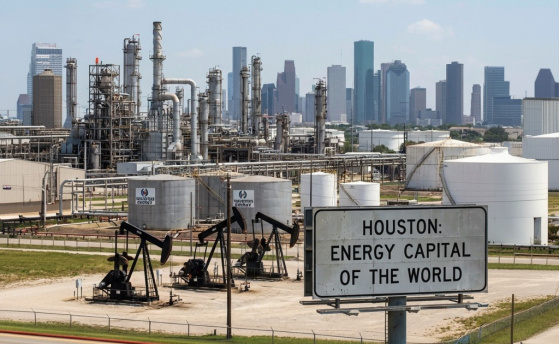
Last week was quite busy, so for this post, I decided to turn to Copilot to help me produce the output. Over the past year, our acquisitions at CWS have been heavily concentrated on properties in the Houston area. Of course, Houston is the energy capital of the United States, but it’s also become more diversified over the years. Given the significant run-up in oil and gas prices since the start of the Iranian war, I was curious whether higher energy prices are a net benefit or a cost to the Houston economy and how this may ripple through to the apartment market.
Enjoy!
High Oil Prices: Net Benefit to Houston’s Economy
Houston’s close ties to the energy sector mean rising oil prices usually boost the local economy. When oil is expensive, Houston’s oil & gas firms see higher revenues and often ramp up drilling and investment, which spurs hiring and wage growth across the region. In general, Houston gains from this dynamic – increased energy profits flow into more jobs (from engineers to service industries) and greater spending power locally. For example, as oil markets rebounded after 2020, Houston’s personal incomes and GDP surged (metro GDP jumped ~10% in 2023, with personal income up ~5% that year). High oil prices are admittedly hard on consumers at the pump, but historically the “Energy Capital” sees net economic upside from an oil boom.
That said, the timing and context matter. A sudden, short-lived price spike may not immediately translate into local gains. In early 2026, for instance, oil prices rose amid a Middle East conflict, but Houston’s producers hadn’t expanded drilling yet – so consumers paid more for fuel while energy firms held off on new hiring. Over the longer run, however, sustained high prices tend to prompt more drilling projects and capital spending in Houston’s dominant industry, reinforcing the city’s economic growth. (Conversely, oil busts hit Houston hard – the 2014–2016 price collapse led to an estimated 74,200 local energy job losses and a sharp drop in in-migration.) In summary, Houston is a net beneficiary of elevated oil prices in most scenarios, as a robust energy sector bolsters the broader economy – providing a fertile backdrop for the housing market.
Employment, Population Growth, and Income Gains
Oil-driven growth translates quickly into jobs and population influx, which are critical drivers for housing demand. As energy companies prosper, they hire more workers and support a host of related industries (from engineering and manufacturing to finance and hospitality). Houston’s recent history illustrates this: after the oil slump in the mid-2010s, net migration to Houston had dwindled to only about 22,000 new residents in 2018. But when oil prices recovered in the early 2020s, Houston’s population inflows exploded – the metro added nearly 146,000 net migrants in 2023 alone. In short, high oil = more jobs and people in Houston, as workers flock to take advantage of the expanding opportunities.
This influx of people was accompanied by rising incomes for local households. The energy boom contributed to steady wage growth; by 2024 Houston’s median household income had climbed to about $81K, up from ~$75K in 2022. With more workers earning good pay, families have greater ability to form new households and pay for housing. Many of the incoming residents are young professionals and skilled workers who often opt to rent before buying, which channels strong demographics into the rental market.
Multifamily Apartment Market Impact
Stronger employment and population growth directly bolster Houston’s multifamily sector. As thousands of new residents arrive and existing households see higher incomes, demand for apartments rises. This has been evident in the past couple of years: Houston’s apartment occupancy has trended upward alongside the economic upswing. Metro-wide multifamily occupancy rebounded into the mid-90% range by mid-2025 (after dipping during the oil downturn and pandemic). In 2025 alone, renters absorbed over 26,500 units – Houston’s highest annual apartment absorption since 2021 – a sign of vigorous housing demand driven by job and population gains. Even Class A properties, which struggled a bit in earlier years due to abundant new supply, saw occupancy hit record levels by late 2025 as the renter pool expanded.
Rent growth in Houston has been more modest, but the trend is positive when viewed in context. A surge of new construction in recent years (Houston built tens of thousands of units during the 2021–2024 boom) kept rent increases in check – effective rents actually flattened or dipped slightly year-over-year in 2024–25 across many properties. However, this was more a supply side effect than a demand problem. With construction now slowing (units under construction in late 2025 were down ~34% from a year prior), the gap between supply and demand is closing, setting the stage for healthier rent growth. Meanwhile, nominal rent levels remain higher than during the last oil bust, and landlords report solid leasing traffic. Many newly arrived Houstonians initially rent apartments, boosting occupancy, and as the labor market tightens, landlords gain pricing power. In essence, Houston’s apartment rents haven’t skyrocketed – which is actually advantageous for sustained affordability – but the high occupancy and rising incomes point to renewed rent growth ahead as the market absorbs the new units. [colliers.com]
Apartment investment performance reflects these fundamentals: NOI (net operating income) trends in Houston have outpaced many other markets recently, thanks to steady occupancies. CWS’ portfolio data highlighted Houston as a “notable exception” where same-property revenues were up even as other regions saw declines. By mid-2025, Houston was one of the few major multifamily markets achieving positive rent/NOI growth while nationally many markets faced a post-COVID cooling. In short, Houston’s multifamily fundamentals are on solid footing – high oil prices have kept the local economy humming, translating into strong apartment demand (high occupancy, record absorption) and a platform for future rent gains.
Investor Sentiment and Outlook
Investor sentiment toward Houston multifamily turns bullish when oil is booming. The reasoning is straightforward: a growing, high-income population and full apartments bode well for property revenues. We’ve seen this play out internally – in 2025, CWS significantly expanded its Houston apartment holdings, acquiring four Houston communities, explicitly noting “Houston, we have an opportunity!” as the market’s prospects shone. External investors echo this optimism. Broker offerings in 2025 touted Houston’s “job-rich” submarkets – for example, the Energy Corridor saw over 1 million SF of new office leases and 2,000 new jobs since 2024, a clear spillover of the energy boom fueling housing demand. Such growth stories enhance Houston’s appeal relative to slower-growth markets.
Looking ahead, continued higher oil prices would likely further strengthen Houston’s multifamily performance. More energy expansion means more hiring and possibly another wave of in-migration (the Moody’s forecast calls for Houston’s population to keep rising ~1.4% annually in the coming years). That implies sustained demand for apartments, supporting occupancy rates in the mid-90s% and giving landlords room to raise rents at least modestly in line with income growth. Rent growth is expected to return to positive territory as the new supply pipeline moderates and the economy remains robust. In summary, higher oil prices are a tailwind for Houston’s multifamily sector – boosting employment, population, and spending power, which in turn drive higher occupancy, stable or growing rents, and generally favorable investor returns.
Of course, prudent investors will remain aware of oil market volatility. A severe oil price collapse would pose downside risks (as history shows), but currently the fundamentals are strong. In the present high-oil-price environment, Houston’s economy is on solid footing and its apartment market is benefitting directly – a dynamic that appears set to continue so long as the energy sector stays on an upswing. The bottom line: Houston is a net winner from expensive oil, and that prosperity is feeding through to greater housing demand, robust multifamily performance, and positive sentiment in the apartment investment landscape.
One wildcard to consider is the very negative impact the spike in oil prices is having on the rest of the world, particularly in Asia where oil prices have hit $150 per barrel. Houston has a big port so it’s not completely immune to a slowing world economy. Overall, however, I think being more exposed to Houston from an investment standpoint should be a net benefit for CWS as there should be increasing demand for the products and services Houston’s vast energy economy provides.

Leave a Reply