

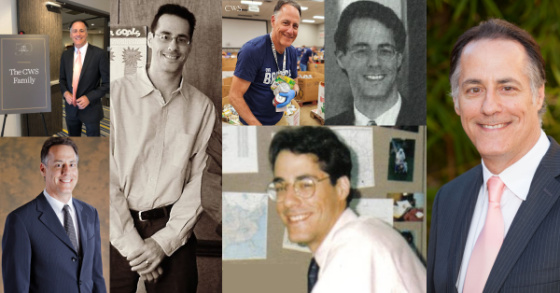
Next week marks my 39th anniversary at CWS Capital Partners. It is hard to comprehend that I have spent nearly four decades at the same firm. When I joined CWS in 1987, Ronald Reagan was President, the Berlin Wall was still standing, apartment investment analysis was performed on Lotus 1-2-3 spreadsheets, and a mobile phone was something only Gordon Gekko could afford. I was 22 years old, optimistic, ambitious, and convinced that hard work and intelligence could solve just about any problem. Looking back now, I realize that while effort and intellect certainly matter, life has a way of teaching lessons that only time can provide.
Thirty-nine years is long enough to experience multiple real estate cycles, economic booms and busts, periods of abundance and periods of anxiety. It is long enough to witness technologies emerge that fundamentally change how we live and work. It is long enough to accumulate successes that bolster confidence and setbacks that cultivate humility. Most importantly, it is long enough to learn that certainty is vastly overrated. When I was younger, I believed wisdom meant having answers. As I approach my 61st birthday, I increasingly believe wisdom is having better questions.
One of the great gifts of longevity is perspective. Living through enough cycles teaches you that conditions are never as good as they seem at the top or as bad as they feel at the bottom. Every generation believes its challenges are unique, yet human beings continue to adapt, innovate, persevere, and surprise us. Over the years, I have watched markets recover from seemingly impossible circumstances, and people overcome obstacles that appeared insurmountable. While each crisis wears a different mask, resilience remains remarkably consistent. Perhaps that is why I have become less interested in predicting the future and more interested in preparing for it.
This evolution in thinking has influenced how I view my role at CWS. When I was younger, investing felt largely about performance and growth. Today, stewardship occupies more of my attention. We are entrusted with the capital of thousands of investors who have worked hard, saved diligently, and placed their confidence in our judgment. That responsibility feels different at 61 than it did at 31. Experience has taught me that protecting capital is every bit as important as growing it. In an era marked by rising interest rates, economic uncertainty, and changing capital markets, I find myself focused less on maximizing upside and more on enhancing durability. Resilient organizations, resilient balance sheets, and resilient people tend to survive long enough to enjoy the benefits of recovery.
Interestingly, many of the lessons I have learned in investing now resonate in my personal life as well. Several years ago, I underwent surgery to repair a severely leaking mitral valve. The operation was successful, and my recovery has been excellent. What surprised me most was that it was only after the surgery that my surgeon told me it was one of the worst valves he had ever seen. That experience left a lasting impression. It reminded me that significant risks can exist beneath the surface long before they become obvious. Just as hidden financial risks can undermine an investment portfolio, hidden biological risks can quietly undermine our health.
As a result, I have become increasingly interested in understanding the science of aging, longevity, cardiovascular health, sleep, nutrition, exercise, and stress management. Some people view this as an attempt to extend life. I view it differently. To me, the goal is not merely to add years to life but to add life to years. The older I get, the more I view health as the foundational asset upon which all other assets depend. Financial success means little if one lacks the vitality to enjoy family, friendships, meaningful work, travel, or simple experiences that make life worthwhile.
Perhaps because I spend so much time studying both financial health and physical health, I have become fascinated by a common principle that applies to both: compounding. Small decisions, repeated consistently over long periods of time, create extraordinary outcomes. Whether investing capital, building a business, strengthening relationships, or preserving physical well-being, the magic rarely occurs overnight. It is the cumulative effect of thousands of seemingly ordinary decisions. Looking back over 39 years, I am less impressed by dramatic breakthroughs than by the extraordinary power of consistency.
Another lesson that has become increasingly important to me is the relationship between realism and optimism. Our current environment often encourages people to choose one or the other. Some view optimism as naïveté. Others view realism as pessimism. My experience suggests that the most effective leaders, investors, and individuals embrace both. Realism requires us to see risks clearly, acknowledge challenges honestly, and confront difficult truths directly. Optimism requires us to believe that despite those challenges, meaningful progress remains possible. The combination of the two creates resilience. Realism without optimism can lead to cynicism. Optimism without realism can lead to disappointment. Together, they create a mindset capable of navigating uncertainty without becoming overwhelmed by it.
Over the last several years, many of my readings and reflections have centered around themes of psychology, philosophy, and personal development. Whether influenced by Jung, Joseph Campbell, Goethe, Steinbeck, or the many contemporary thinkers exploring consciousness and human flourishing, I find myself increasingly drawn toward the concept of what many traditions call the witness—the part of ourselves capable of observing our experiences without becoming completely consumed by them. When I was younger, I often felt like I was riding the roller coaster. These days, I am trying harder to observe the roller coaster. This subtle shift in perspective has helped me navigate both personal and professional challenges with greater equanimity.
At various points in my life, I measured success by achievements, financial results, acquisitions, or milestones. Today, I find myself asking somewhat different questions. Am I contributing to the well-being of others? Am I helping create opportunities for employees, residents, investors, friends, and family members to flourish? Am I using whatever gifts and resources I have been given responsibly? Am I growing not just older, but wiser? Those questions seem increasingly important as the years accumulate.
As I begin my 40th year at CWS, I feel immense gratitude. Gratitude for colleagues who have shared this journey. Gratitude for investors who have entrusted us with their capital. Gratitude for challenges that forced growth and for successes that provided encouragement. Gratitude for Heather, my family, and the many friends who enrich my life. Gratitude for my health, especially knowing how fragile it can be. And perhaps most of all, gratitude for the understanding that life remains unfinished.
At 22, I believed the goal was to arrive. At 61, I have come to appreciate that life is less about arrival and more about participation. The journey itself is the reward. There will always be another challenge, another market cycle, another investment decision, another lesson waiting patiently around the corner. My hope is that I can continue showing up with curiosity, humility, realism, optimism, and a deep commitment to stewardship.
Thirty-nine years ago, I started this journey hoping to build a successful career. Today, I am far more interested in building a meaningful life. Thankfully, I have learned that the two do not have to be mutually exclusive. In fact, when approached thoughtfully, they can become one and the same.

Excellent! I’m a decade and a half older, and I recognize the modifications in perspectives from our youth to our older selfs. You present them beautifully and honestly. I will endeavor to ink to your wise articles more consistently. Thank you for your wise words. I suspect your viewpoints guide many of us with improved outlooks and the motivation to make changes to improve our personal lives and those of our loved ones.
I find myself at 66 reflecting on my career and life path in the same way you articulated in your post. Thanks for sharing.
Remarkable, Gary. Thoughtfully well said. Looking forward to seeing how the 40th aligns into your outstanding career and your measured success that you noted. Cheers, Carl