

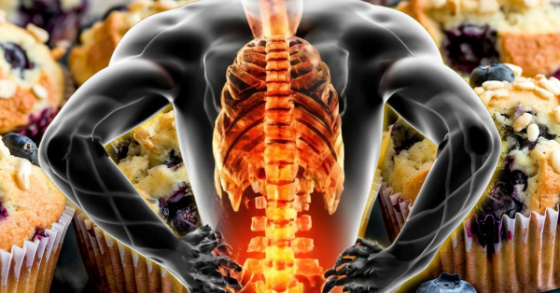
Not too long ago, I shared that I had lost 14 pounds. It felt like a solid milestone—a gratifying number on the scale, a little looser fit in the waistline, and a welcome step toward better health. But numbers alone don’t always change behavior. What truly changed everything for me wasn’t just losing the weight; it was learning the hidden physical mechanics behind those 14 pounds.
A piece of biomechanical insight reframed my entire perspective: For every single pound of excess body weight you lose, you remove approximately four pounds of pressure from your lower back and spine.
Suddenly, my weight loss wasn’t about aesthetics or an arbitrary number on a digital scale. The math was immediate and striking: losing 14 pounds meant relieving nearly 56 pounds of constant, unrelenting force off my lumbar spine.
That 4:1 ratio became the prism through which I now evaluate nearly every health and nutritional choice I make.
From Chronic Sciatica to Unprecedented Relief
For at least eight years, my relationship with physical movement was dictated by chronic sciatica. Anyone who has dealt with nerve pain knows how insidious it is. It isn’t just physical discomfort; it’s a constant mental tax. You second-guess serving hard on the tennis court, you hesitate before bending down, and you live with an underlying fear that one wrong movement will set off a cascade of inflammation and days of immobility.
Today, I am experiencing the longest sustained period without material sciatic pain that I’ve had in nearly a decade.
The turning point was a combination of targeted interventions. The first was surgery, which I can say, in hindsight, was a mistake. I felt no sustained relief and ended up with numbness under my right toes that has now spread to my left. That’s life. You weigh the odds, and you make your bets. Fortunately, for me, most of the consequential bets I have made have paid off, but this one didn’t. I have adapted to the numbness, and maybe someday it will dissipate.
Fast forward to two years later, and I decided to try some supplements to see if that would ease the pain by lessening the inflammation. For a while I had some beneficial effects from taking MSM, but that was fleeting. A few months ago I tried astaxanthin—a potent natural antioxidant and anti-inflammatory—and so far the results have been outstanding, as it has begun shifting the baseline of my tissue recovery and systemic inflammation. I think the long-term game changer, however, is pairing that reduction in underlying inflammation with the physical offloading of 56 pounds of mechanical pressure. This is creating a compound effect.
The relief is a profound physical liberation, but it is equally a psychological anchor. Knowing that every clean meal, every disciplined decision, and every pound kept off directly shields my spine gives me an incredible sense of control over my own health.
The Blueberry Muffin Test: Trade-offs in High Definition
Once you see your health through this 4:1 prism, simple food cravings take on a completely different weight.
Recently, I found myself eyeing a classic bakery blueberry muffin. It seems innocent enough—it has “blueberries” in the name, after all. But when evaluated through the lens of spinal health and systemic inflammation, the reality of that muffin comes into sharp focus.
A typical commercial blueberry muffin is essentially a piece of cake disguised as breakfast. Packed with refined flour, 30 to 40 grams of added sugar, and industrial seed oils, it delivers a massive spike in blood glucose followed by an inevitable insulin crash. More importantly, that sudden flood of refined sugar triggers systemic, low-grade inflammation—the exact physiological environment that aggravates nerve sensitivity and joint stiffness.
When I looked at that muffin through my new prism, the trade-off became starkly simple:
Is 5 minutes of enjoying a sugary pastry worth spiking my systemic inflammation and taking a step backward from keeping 56 pounds of pressure off my lower back?
The answer was an effortless no. It wasn’t about willpower or self-deprivation; it was about clear, objective math. When the consequences are that direct, passing on the muffin isn’t a sacrifice—it’s an obvious choice to protect my quality of life.
I was further put to the test as on Friday mornings at 6:30, we have someone come to the house to do a tennis clinic. Last Friday was the first time for one of the players, and he was kind enough to bring over a package of very enticing blueberry muffins. I knew I was going to have to pass on them. After the clinic was over, he asked if I had time to stay for coffee and a blueberry muffin. Fortunately, from the blueberry muffin perspective, I had to take our dog to the groomer, so I couldn’t stay. He is a wonderful person and extremely interesting, so I was disappointed that I couldn’t stay for the social interaction and intellectual stimulation. Fortunately, I avoided the sugar stimulation as the positive tradeoff.
What the InBody Scan Revealed
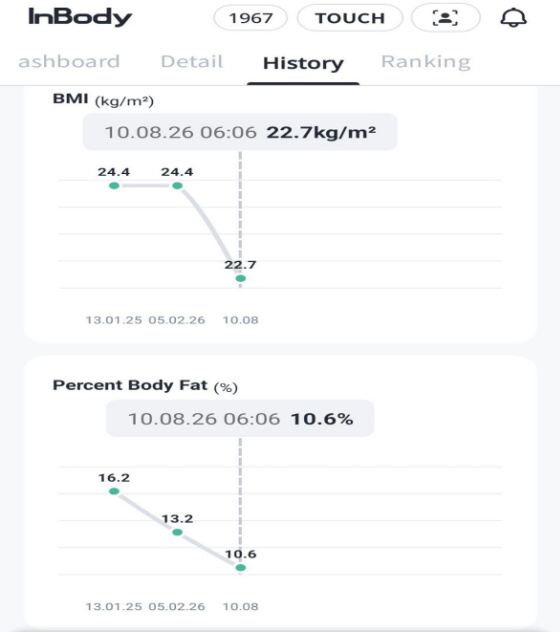
The physical feeling of being pain-free is the ultimate validation, but tracking the objective data behind the scenes provides a fascinating roadmap. Looking closely at my recent InBody body composition scans, the metrics tell a clear story of transformation beyond just raw weight loss:
* Visceral Fat Reduction: The scan showed a marked reduction in visceral fat—the metabolic fat stored deep around internal organs that drives systemic, low-grade inflammation throughout the body and around neural pathways.
* Preservation of Lean Muscle Mass: Often, weight loss comes at the expense of skeletal muscle. By prioritizing high protein intake and maintaining intense physical output, my body composition shifted toward a higher percentage of lean tissue while dropping fat mass. As the screenshot above shows, my body fat percentage dropped to 10.6%.
* Optimized Body Water Balance: The balance of intracellular to extracellular water improved, reflecting reduced systemic fluid retention and healthier cellular function.
Losing 14 pounds of actual burden—while preserving the active muscle needed to stabilize my core, hips, and back—has fundamentally upgraded how my body moves on and off the court.
Re-Evaluating Alcohol: A Simple Cost-Benefit Analysis
When protecting your spine becomes your primary filter, choices that once felt normal or routine get re-evaluated under that same sharp light. Alcohol is another clear example.
I was never a heavy drinker, but like many, I enjoyed a glass of wine or a beer in social settings as part of the fabric of life. However, when you view alcohol through the lens of spinal integrity and systemic recovery, the calculus changes instantly:
* Inflammatory Trigger: Alcohol is inherently inflammatory. It disrupts the gut barrier, triggers metabolic inflammation, and compromises soft tissue recovery overnight.
* Sleep Disruption: Even moderate alcohol intake fragments deep sleep and suppresses overnight Heart Rate Variability (HRV), preventing the deep physical tissue repair that occurs during restorative sleep cycles.
Looking at the equation plainly: The upside of a drink is minimal, temporary, and fleeting. The downside is vast—potentially triggering a flare-up of back pain, dampening energy, and eroding the physical vitality I’ve worked hard to reclaim.
Knowing this, there is a non-zero percent chance I will never have another alcoholic drink again, especially since I have come to enjoy non-alcoholic beer. Even in this realm, however, I have to be mindful of which ones I choose and when I drink them, as some have more carbs than others.
The beauty of this realization regarding the real potential of permanently refraining from alcohol is that it carries absolute clarity. It provides effortless “social cover.” I don’t need a complex explanation or an elaborate excuse at a dinner or event. My objective is simple and unshakeable:
Protecting my back and sustaining pain-free vitality is my number one health goal, and I will not take any action that runs counter to that.
Living Through the Prism
Health decisions can often feel overwhelming when driven by vague ideals like “eating better” or “getting in shape.” But when you anchor your daily habits to a clear, tangible principle, decision-making becomes remarkably easy.
Every nutritious choice isn’t a restriction; it’s a deliberate investment in keeping 56 pounds of pressure off my spine. Every workout isn’t just calorie burning; it’s building the muscular armor required to stay on the court, stay active, and live without pain.
When you find a lens that brings that level of clarity to your health, you don't just stick to a routine—you embrace a whole new standard of living.Click To Tweet

Very inspirational. Thank you.