

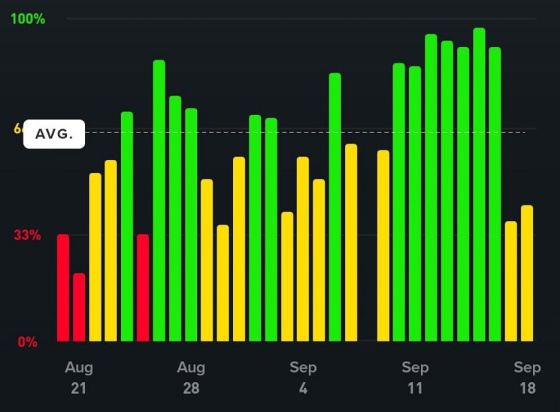
For anyone who tracks their health data, there is a distinct, satisfying feeling when your wearable lights up green. It is an objective nod from your body that your nervous system is balanced, your heart rate variability is up, and your resting heart rate is down.
For a long time, my recovery metrics have looked like a standard tapestry of yellow and green, with the occasional red dip after a grueling travel week or a high-stress stretch. But recently, looking at my Whoop data while in Ibiza, something remarkable happened: seven straight days in the green.
A full week of optimal recovery. No yellow days, no red dips. Just an uninterrupted baseline of physical resilience.
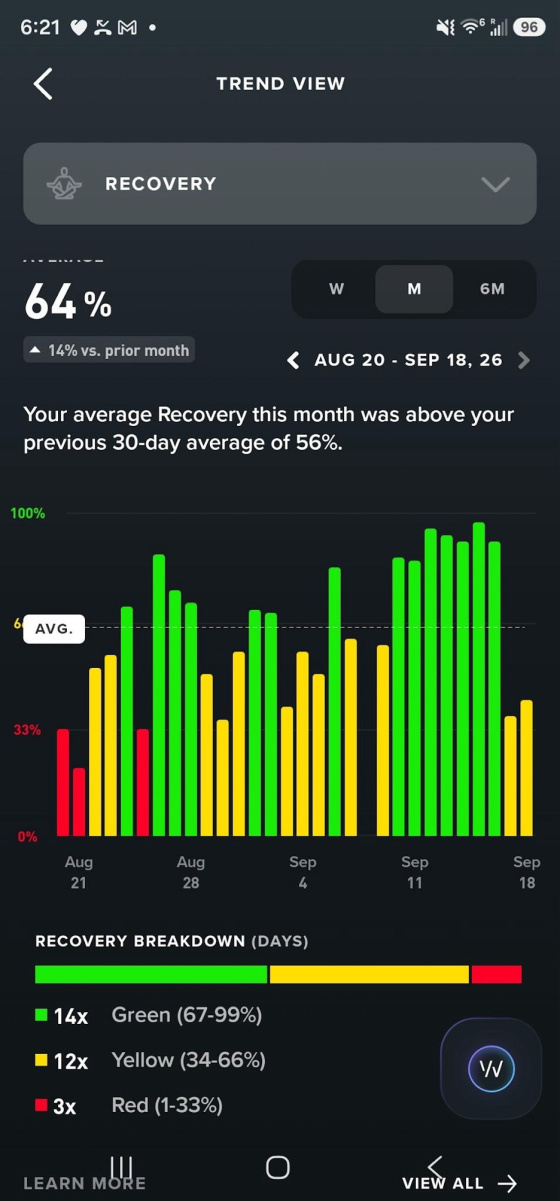
As someone deep in the operational currents of real estate investment and the apartment industry, I tend to view efficiency through systems, metrics, and consistent effort. But staring at seven green bars in a row forced me to step back and ask a fundamental question: What changed?
The Physiology of a Real Break
In our line of work, high performance is often equated with high throughput. We monitor market shifts, navigate interest rates, and manage large portfolios, often operating in a persistent state of low-grade sympathetic drive—the classic “fight or flight” mode. We tell ourselves that a weekend off or an extra hour of sleep is enough to reset the clock.
The data says otherwise.
True recovery requires a fundamental shift into parasympathetic dominance—the “rest and digest” state. Stepping away from the day-to-day demands of work didn’t just give me free time; it severed the invisible, subtle thread of cognitive friction that lingers in the background of executive life.
During our time in Ibiza, the routine shifted. I was getting deep, uninterrupted rest. I was walking along the beach, exercising, and spending meaningful, unhurried time connecting with Heather. We were having genuine fun. That distance from daily professional pressures created a physiological buffer, allowing my autonomic nervous system to finally rebalance. The seven green days weren’t a fluke; they were the direct biological output of a true mental and emotional reset.
The European Paradox: Quality over Strictness
Naturally, traveling in Europe presents a nutritional challenge—or so I thought.
Back home, I maintain a disciplined nutritional protocol aimed at long-term cardiovascular and metabolic health. I monitor my lipids, limit refined carbohydrates, and keep a watchful eye on sugar. Yet, while in Europe, I found myself indulging in warm bread and the occasional artisan dessert. By standard domestic metrics, I was “deviating” from my plan.
And yet, my recovery score hit a monthly peak of 64%—well above my previous 30-day average of 56%.
This highlights what many call the European Paradox, though it’s less of a paradox and more of a lesson in food quality and movement:
- Ingredient Integrity Matters
European food standards, particularly around agricultural ingredients, flour processing, and additive restrictions, are structurally different.
The bread isn’t loaded with high-fructose corn syrup or ultra-processed preservatives; the dairy is often minimally processed; the meals rely on fresh, local ingredients. Even when incorporating a few extra carbohydrates, the metabolic toll feels remarkably different because the underlying food matrix is cleaner.
- Built-In Ambient Movement
In the States, exercise is often an event—we go to the gym, hop on the treadmill, or hit the tennis court. In Europe, movement is the baseline environment. Between walking through coastal towns, strolling along the water, and active exploration, you easily accumulate thousands of steps before lunch.
This ambient, low-intensity movement acts as a continuous glucose sink, blunting post-meal blood sugar spikes and enhancing digestion naturally.
- The Power of Social Connection
We often treat nutrition and exercise as the sole pillars of health, but human connection is a potent biological regulator. Sitting down for long, relaxed meals without rushing, enjoying shared experiences, and being present with people directly lowers cortisol levels. That reduction in stress hormones makes your body far more resilient to slight dietary variations.
The Shift in Context
As our trip transitioned to a new location with larger groups, later evenings, and a faster social rhythm, I watched my Whoop recovery scores step down into the yellow zone. It was a perfect, real-time validation of the data. The moment sleep timing shifts and social stimulation increases, the body registers the load.
It wasn’t a setback; it was simply a reminder that recovery is a dynamic equilibrium.
Bringing the Reset Home
As I prepare to head back home and dive back into my daily routine, my primary takeaway isn’t that I need to move to the Mediterranean (as tempting as that sounds). The takeaway is that recovery is an active, multi-dimensional discipline.
We cannot optimize our performance purely through tracking metrics, taking supplements, or maintaining rigid diets if we ignore the massive impact of psychological stress, food quality, ambient movement, and genuine rest.
The seven green days proved that when you give the body the right environment—clean food, consistent movement, deep connection, and mental space—it knows exactly how to heal and thrive. The challenge for all of us, especially in high-demand environments, is finding ways to build small pockets of that “Ibiza effect” into our daily lives, long after the trip is over.


Leave a Reply