

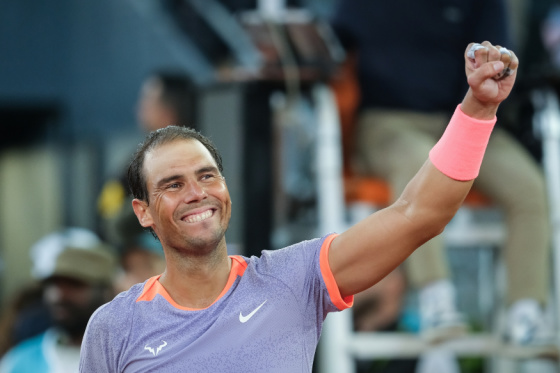
Tennis legend Rafael Nadal announced his retirement last week. He was the embodiment of the warrior ethos and was taught from a very young age that everything he did was intended to strengthen his endurance, as I will soon show.
A few years ago, I read Rafa’s autobiography, and I thought I would go right to the source about the influences that helped shape this extraordinary competitor and human being. What’s interesting is that it was written when he was 23 years old, which is pretty amazing that someone at that age already was so successful and had such notoriety to warrant an autobiography. His greatness continued as he went on to have a remarkable career for another dozen years.
Nadal won 22 majors. And what is most astounding and will probably never be surpassed is that 14 of those came from winning the French Open at Roland Garros. His lifetime record at the French Open was a mind-boggling 112-4. It’s no wonder they have a statue of him there.
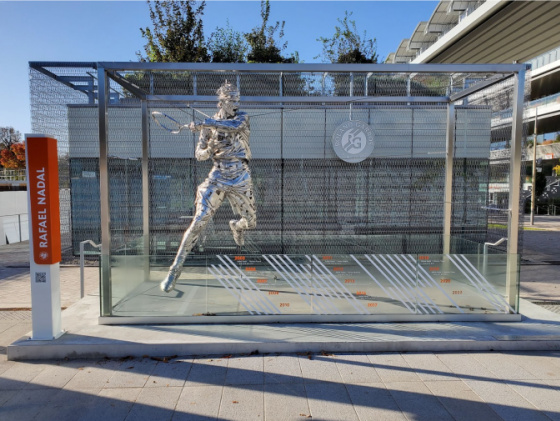
He won his first championship at 19 and his last one occurred in 2022 at 36. While some people think he was a one-hit wonder and could only excel on clay, his eight other major titles equal Andre Agassi. And before Federer and Nadal entering the stratosphere of significant titles, Pete Sampras had the modern era record of 14. Said differently, Nadal’s 14 wins at the French Open equaled all of the previous cumulative record holders of Slams.
This list of all-time Grand Slam Title winners shows just how impressive Nadal’s eight non-French Open wins are.
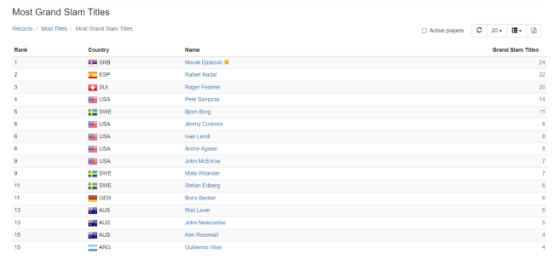
One can see that Djokovic is at the top of the list and can still add to his title count. Even 15 years ago, it was already apparent to Nadal that Djokovic was going to be a force to reckon with.
Everybody still had their eyes on Federer and me, but we both knew Djokovic was the up-and-coming star and that our dual dominance was going to be more at risk from him than from any other player. Disconcertingly, he was also younger than me. This was something new.
With Federer, the rule is always to keep patiently plugging away, knowing you’ll force him sooner or later to make mistakes. With Djokovic, there is no clear tactical plan. It is simply a question of playing at your very best, with maximum intensity and aggression, seeking to retain control of the point because the moment you let him get the upper hand, he is unstoppable.
Nadal has produced extraordinary results despite missing 18 majors due to injuries! Imagine how many Nadal may have won had he not been plagued by injuries. He said this about the physical challenges faced by professional athletes.
Playing sports is a good thing for ordinary people; sports played at the professional level is not suitable for your health. It pushes your body to limits that human beings are not naturally equipped to handle. That’s why just about every top professional athlete has been laid low by injury, sometimes a career-ending injury.
Nadal has always been very realistic about how fleeting an athlete’s career can be, that one should be grateful for every moment they get to compete at such an elite level, and that opportunities must be seized every time those chances arise.
That period allowed me to absorb a lesson that all elite sportsmen and -women need to heed: that we are enormously privileged and fortunate, but that the price of our privilege and good fortune is that our careers end at an unnaturally young age. And, worse, that injury can cut your progress short at any time; that from one week to the next you might be forced into premature retirement. That means, first, that you must enjoy what you do; and, second, that the chances that come your way once won’t necessarily come your way again, so you squeeze the most you possibly can out of every opportunity every single time, as if it were your last.
Nadal is considered one of the most ferocious competitors, not only in tennis, but in all sports. Here are some instructive excerpts about his competitive nature.
It’s important for me to win, at everything. I have no sense of humor about losing.
I stop being the ordinary me when a game is on. I try and become a tennis machine, even if the task is ultimately impossible.
You have to cage yourself in protective armor, turn yourself into a bloodless warrior. It’s a kind of self-hypnosis, a game you play, with deadly seriousness, to disguise your own weaknesses from yourself, as well as from your rival.
Nadal is famous for his rituals and almost OCD-type nature on the court and in preparation for matches off the court.
Forty-five minutes before the game was scheduled to start I took a cold shower. Freezing cold water. I do this before every match. It’s the point before the point of no return; the first step in the last phase of what I call my pre-game ritual. Under the cold shower I enter a new space in which I feel my power and resilience grow. I’m a different man when I emerge. I’m activated. I’m in “the flow,” as sports psychologists describe a state of alert concentration in which the body moves by pure instinct, like a fish in a current. Nothing else exists but the battle ahead.
Billie Jean King has famously said that “pressure is a privilege.” Nadal absolutely thrives on pressure and feeds off of it.
I thrive on the pressure. I don’t buckle; I grow stronger on it. The closer to the precipice I am, the more elated I feel. Of course I feel nerves, and of course the adrenaline and the blood are pumping so hard I can feel them from my temples to my legs. It’s an extreme state of physical alertness, but conquerable.

Toni Nadal and Rafael
Nadal’s uncle Toni was his long-time coach starting from a young age. Nadal’s father is a very talented and successful businessman. Family always comes first with the Nadals and nothing can ever break that bond. Given this, Toni has a 50% share in some of the businesses run by Rafa’s father but contributes nothing to the businesses. Rafa’s father produces all of the results and Toni is a beneficiary of that. On the other hand, this has freed up Toni to dedicate himself fully to coaching Rafa for almost his entire career. He generated enormous value in doing this and that the arrangement was extremely fair and extraordinarily lucrative for all involved.
Toni was a very intense taskmaster who believed that his sole purpose was to build up extraordinary endurance and resilience within Rafa.
The blows to morale and the relentlessly harsh discipline to which he submitted Rafa all had a grand strategic purpose: teaching him to endure.
But Toni was hard on Rafa because he knew Rafa could take it and would eventually thrive.
Toni believes that kids are coddled way too much and as a result they are soft and can blow over when the slightest wind arises. Only deeds matter.
People get confused: they fail to grasp that you are not special because of who you are but because of what you do.
People sometimes exaggerate this business of humility. It’s a question simply of knowing who you are, where you are, and that the world will continue exactly as it is without you.”
Returning to the centrality of endurance in his coaching of Rafa.
He always stressed the importance of endurance. “Endure, put up with whatever comes your way, learn to overcome weakness and pain, push yourself to breaking point but never cave in. If you don’t learn that lesson, you’ll never succeed as an elite athlete”: that was what he taught me.
Ask him what he says to Rafa on those days when the body rebels and the pain seems too great to compete on court, and his reply will be: “I say to him, ‘Look, you’ve got two roads to choose from: tell yourself you’ve had enough and we leave, or be prepared to suffer and keep going. The choice is between enduring and giving up.’ ”
Rafa not only learned important lessons from Toni, but from his father as well.
I was thinking pragmatically, the way my father does under pressure. Enduring means accepting. Accepting things as they are and not as you would wish them to be, and then looking ahead, not behind. Which means taking stock of where you are and thinking coolly.
And this is a good segue to the most vital aspect of tennis, and life overall, controlling one’s mind.
That day in Melbourne I saw, more clearly than ever before, that the key to this game resides in the mind, and if the mind is clear and strong, you can overcome almost any obstacle, including pain. Mind can triumph over matter.
And controlling one’s mind doesn’t just happen. It requires consistent and intensive training over long periods of time. One has to derive some enjoyment from a degree of suffering and be willing to accept delayed gratification. Results will not come instantly but over time the work and effort will compound and the results will be a byproduct of such consistent commitment.
And of one thing I have no doubt: the more you train, the better your feeling. Tennis is, more than most sports, a sport of the mind; it is the player who has those good sensations on the most days, who manages to isolate himself best from his fears and from the ups and downs in morale a match inevitably brings, who ends up being world number one.
Nadal always comes back to the critical importance of always keeping one’s cool and never losing one’s head.
Toni said tennis was a game in which you had to process a lot of information very fast; you had to think better than your rival to succeed. And to think straight, you had to keep your cool.
In tennis the outcome often turns less on being the better player overall than on winning points at critical times. That’s why tennis is such a psychological sport. It’s also a reason why you should never allow victory to go to your head. At the moment of triumph, yes, drink in the euphoria. But later on, when you watch a match you’ve won, you often realize—sometimes with a shudder—how very close you came to losing.
I am not a robot; perfection in tennis is impossible, and trying to scale the peak of your possibilities is where the challenge lies. During a match you are in a permanent battle to fight back your everyday vulnerabilities, bottle up your human feelings. The more bottled up they are, the greater your chances of winning, so long as you’ve trained as hard as you play and the gap in talent is not too wide between you and your rival.
One of his closest confidants sums up Rafa in this way.
In this decision-making frenzy, having a cool head is vital, and having a cool head depends on your emotional well-being. This is the single most important attribute that Rafael possesses. His state of alertness, sustained for hours at a time, is almost superhuman. It is the key to everything.”
I have written a number of times about how important it is to let go of the previous point and turn all of your attention to the point at hand. This is so much easier said than done as I have a tendency to self-flagellate so when I make a mistake I want to keep dwelling on it and analyzing it. This is exactly the wrong thing to do if I hope to be consistently successful.
That’s tennis. You play a great point, you win with a fine shot at the end of a long and tense rally, but that has no more value in the final score than the gift of a point I gave him here. That’s where the mental strength comes in, what separates champions from near champions. You put that failure immediately behind you, clean out of your mind. You do not allow your mind to dwell on it. You draw, instead, on the strength of having won the first point and build on that, thinking only of what comes next.
As Rafa learned from his father, acceptance is vitally important if one is to succeed. When playing at an elite level your opponents are going to make some amazing shots and the best thing you can do is accept that is part of the game but also recognize they’re human too, and opportunities will come your way if you stay calm and play consistently and have the courage to take chances when the odds are in your favor.
When Federer has these patches of utter brilliance, the only thing you can do is try and stay calm, wait for the storm to pass. There is not much you can do when the best player in history is seeing the ball as big as a football and hitting it with power, confidence, and laser accuracy.
If you give your opponent more credit, if you accept that he played a shot you could do nothing about, if you play the part of the spectator for a moment and generously acknowledge a magnificent piece of play, there you win balance and inner calm. You take the pressure off yourself. In your head, you applaud; visibly, you shrug; and you move on to the next point, aware not that the tennis gods are ranged against you or that you are having a miserable day, but that there is every possibility next time that it will be you who hits the unplayable winner.
I will sign off with two more excerpts that I think do a wonderful job of summarizing what made Nadal so unique and the unwavering commitment with which he approached the job of playing tennis that reinforces, Russell Wilson’s belief that “the separation is in the preparation.”
“The secret of the tremendous appeal he has worldwide,” says Moyá, “is that you can see he is as passionate as McEnroe was, but he has the self-control of Borg, the cold-blooded killer. To be both in one is a contradiction, and that’s what Rafa is.”
One lesson I’ve learned is that if the job I do were easy, I wouldn’t derive so much satisfaction from it. The thrill of winning is in direct proportion to the effort I put in before. I also know, from long experience, that if you make an effort in training when you don’t especially feel like making it, the payoff is that you will win games when you are not feeling your best. That is how you win championships, that is what separates the great player from the merely good player. The difference lies in how well you’ve prepared.
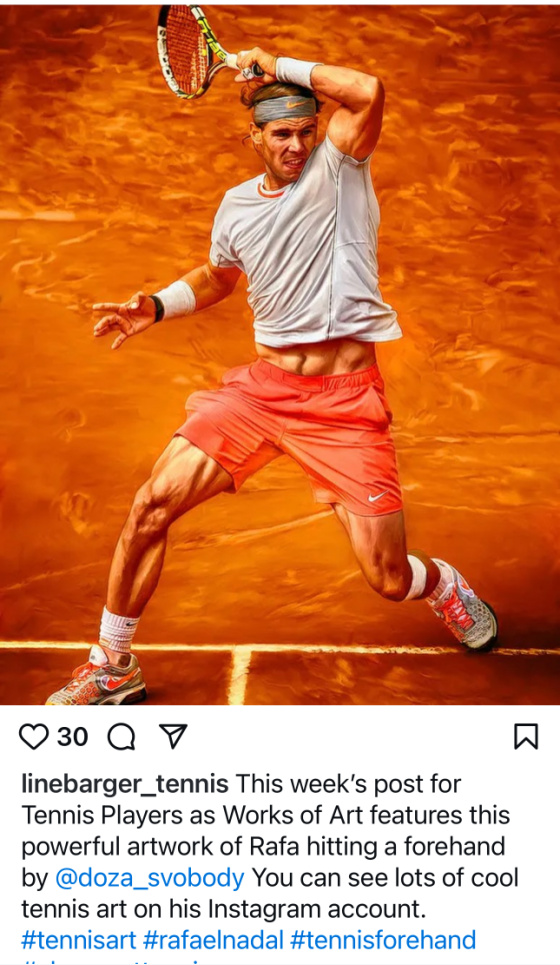
Instagram Rafa Nadal artwork by @doza_svobody

Leave a Reply